Key Takeaways
The short version of what the data says:
- Autism parents are restructuring their entire careers around therapy access, not by choice, but out of necessity.
- Nearly 1 in 5 started their own business because no employer would flex enough to make therapy possible.
- National workforce data confirms this pattern. It is part of a larger caregiving crisis reshaping the US labor market.
- The cost is not just financial. It shows up in sleep, career advancement, and professional identity.
- Faster access to the right provider means less time holding a fragile schedule together.
I want to be upfront about something before we get into this. My family is one of the lucky ones. When our son was diagnosed, my wife already worked from home. We made the decision to homeschool way before we understood that he was on the autism spectrum.
The scheduling pressures that define so many autism families' working lives, the impossible calendar math, the career pivots, the graveyard shifts, did not hit us the same way they hit most. I know that. And it is precisely because I know how much easier that made things for us that the data in this piece stood out to me.
Because what these parents are doing? Most families do not have our options. And for ten years in marketing at Hopebridge, one of the country's largest pediatric ABA providers, I sat across from families who were navigating all of this in real time. I heard those conversations. I worked in collaboration with the clinical teams. I have a close view of how hard this system is to access under the best circumstances. That context is the lens I am bringing to this data.
A Simple Question
A question went up in a large autism parent support group a few weeks ago. It was simple: what jobs are we all working to accommodate our kids' schedules?
The thread resonated with others.
More than 200 parents responded in a matter of hours and days. And what they shared was not a list of jobs. It was a map of adaptation. School bus routes chosen because they run before Applied Behavior Analysis (ABA) therapy starts. Graveyard shifts taken specifically to stay awake during morning therapy. Lawn care businesses started because no employer would give enough notice for a Tuesday cancellation. Kitchen table travel agencies built during nap time and after school pickup.

Sarah spent eight years managing a restaurant. She loved the work. When her son was diagnosed and his ABA therapy schedule locked in at five days a week, the restaurant schedule became impossible. She now drives a school bus. Same hours. Same days off. Same school year. She did not choose this job. She chose her son's therapy window.
Her story is not unusual. It is the rule.
Names and identifying details throughout this article have been changed to protect privacy. All individuals are based on real responses from the source community thread.
By the Numbers
When we analyzed the thread, a clear picture emerged. Here is how the responses broke down across job categories:
| Job Category | %% of Respondents |
|---|---|
| Education sector (paras, bus drivers, teachers, aides) | 20% |
| Self-employed / own business | 19% |
| Healthcare (nurses, CNAs, RBTs) | 17% |
| Remote / work from home | 10% |
| Beauty and cleaning services | 8% |
| Gig economy (DoorDash, Instacart, Amazon Flex, Uber) | 6% |
| Night or graveyard shift strategy | 5% |
| Unable to work / full-time caregiver | 5%+ |
Data reflects responses from a single thread posted in early 2026 in a private Facebook support group for parents of children with autism with 425,400+ members. This represents a convenience sample. Responses came primarily from parents in the United States, with some international participation. Findings may not reflect all socioeconomic backgrounds or geographic contexts, including families in rural therapy deserts or those without reliable internet access.
Two findings stand out above the rest. One more deserves acknowledgment before we get to them: the 5% who said they cannot work at all is almost certainly an undercount. A significant portion of the thread was parents who said they were just there to read the comments. That is not a neutral data point. In clinical terms, these represent the highest-acuity families, those managing the most complex care needs, who have often exited the labor market entirely and may never re-enter it. They do not show up in unemployment statistics because they stopped looking for work. They are the quietest voices in this data and likely the most stretched, and they are largely invisible to the workforce research that informs policy.
autism parents in this group work in schools. Most of them did not choose education. They chose their child's therapy schedule.
The draw is almost never a passion for the profession. It is the schedule. Matching school hours means matching therapy hours. Several parents specifically work at the same school their child attends. It is caregiving strategy dressed up as a career choice.
Nearly 1 in 5 started their own business. Not because of opportunity. Because no employer would flex enough.
Lawn care companies. Cleaning businesses. Nail salons. Food trucks. The word that comes up most in these posts is not passion or entrepreneurship. It is flexibility. Many parents cite losing a previous job, or being pushed out of one, as the moment they decided to build something they could control. Some found real fulfillment on the other side of that pivot. Others would go back to their old career in a heartbeat if the schedule could work. Nicholas put it plainly:
I had to start a business doing lawn care. It was the only way to work around my son's schedule and not lose employment.
— Nicholas
That phrase, "had to," is doing a lot of work. This is not the American dream. It is the American workaround. And for single parents navigating this without a partner to share the logistics, the workaround has to work twice as hard. Several parents in this thread are doing all of it alone, managing therapy schedules, school pickups, and income with no backup and no margin for error.
The National Data
What these families are experiencing has a name. And it is showing up in workforce data across the country.
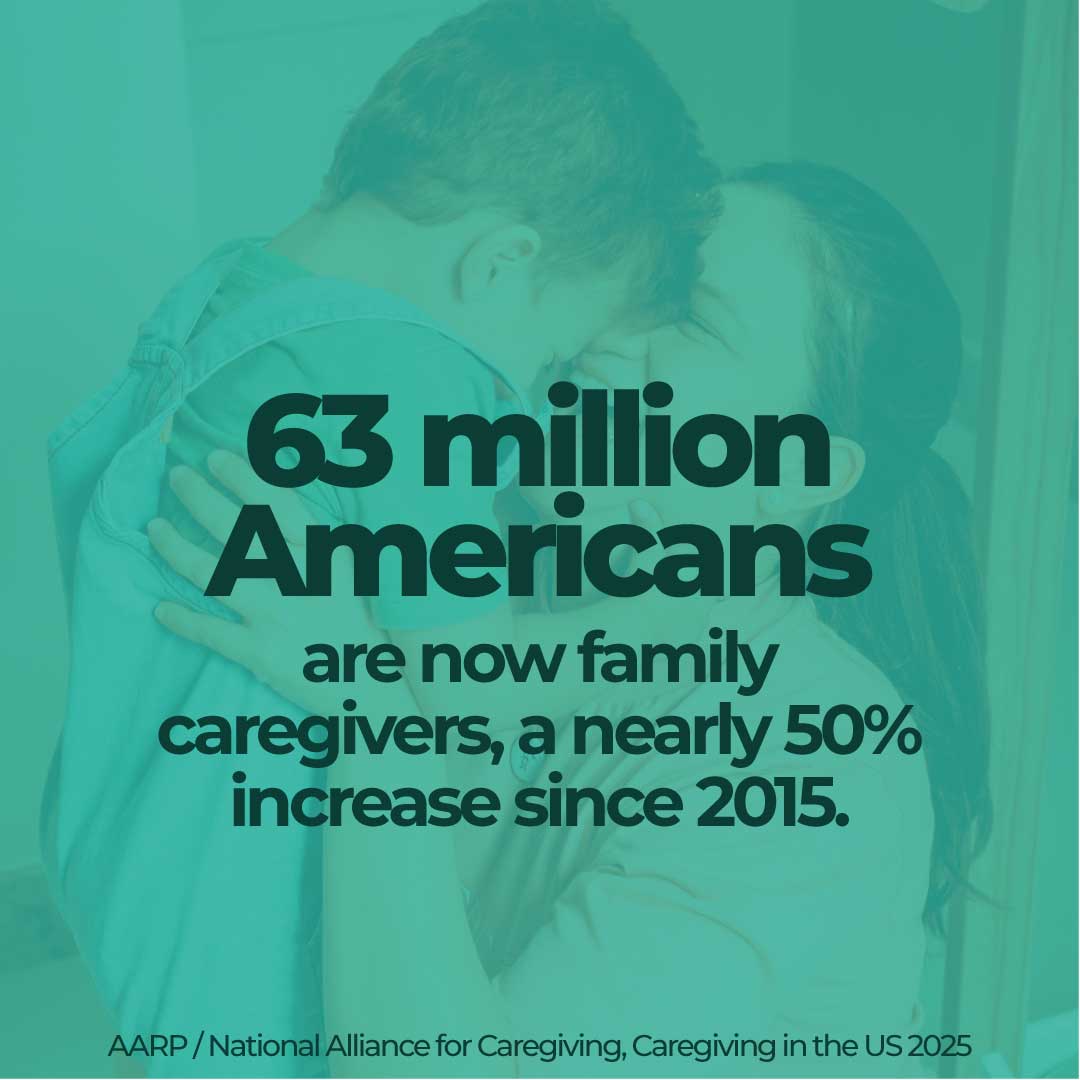
Seven in ten of those caregivers are employed. But employed does not mean stable. It means managing. It means FMLA paperwork and understanding bosses and shift swaps and driving across town between a morning session and an afternoon pickup. It means running a parallel life alongside your actual job and hoping neither one collapses.
42% of women who voluntarily left the workforce in 2025 cited caregiving responsibilities as the primary reason. Catalyst / HR Brew, February 2026
That is not a personal decision. That is a structural one. When the system does not accommodate the schedule that therapy requires, something has to give. And research consistently shows it is mothers who absorb that cost first.
The timing makes this harder. Between 2024 and mid-2025, the share of Fortune 500 companies requiring full-time in-office work nearly doubled, from 13% to 24%. In the same period, workforce participation among women ages 25 to 44 with young children dropped nearly three percentage points. Researchers note the two trends are not unrelated, though the relationship is correlational rather than proven causal.
Worth noting: while mothers absorb the larger share of this career cost, fathers in this thread are not exempt. Men working graveyard shifts, men who quit jobs to become full-time caregivers, men who built businesses from scratch to stay available for their child's therapy window. The burden is not evenly distributed, but it is not one-sided either.

A growing workforce concept called microshifting, covered recently by the Associated Press, describes workers tackling job duties in short productive bursts around personal obligations rather than a fixed nine-to-five stretch. For the general workforce, microshifting is framed as a flexibility perk. For autism parents, it is often the only configuration that keeps employment possible at all. The difference is that most microshifters choose it. Most autism parents have no other option.
As of February 2026, the most recent data available, the US economy lost 92,000 jobs and unemployment rose to 4.4%. Autism families are navigating all of this against a backdrop that is not getting easier.
The Night Shift Math
About 5% of parents in the thread work overnight or graveyard shifts. Not because the pay is better. Not because the hours are convenient. Because it is the only configuration that lets them be awake and present when therapy starts at 9am.
Marcus works four 12-hour overnight shifts a week. He gets home as his daughter is waking up. He gets a few hours of sleep while she is at school and at her morning sessions. Then he picks her up and the afternoon begins. He has been doing this for three years.
It took some time getting used to not resting much. But I like being available for her during the day.
— Marcus
That sentence is worth sitting with. Not resting much. Said matter-of-factly. As if it is just the math.
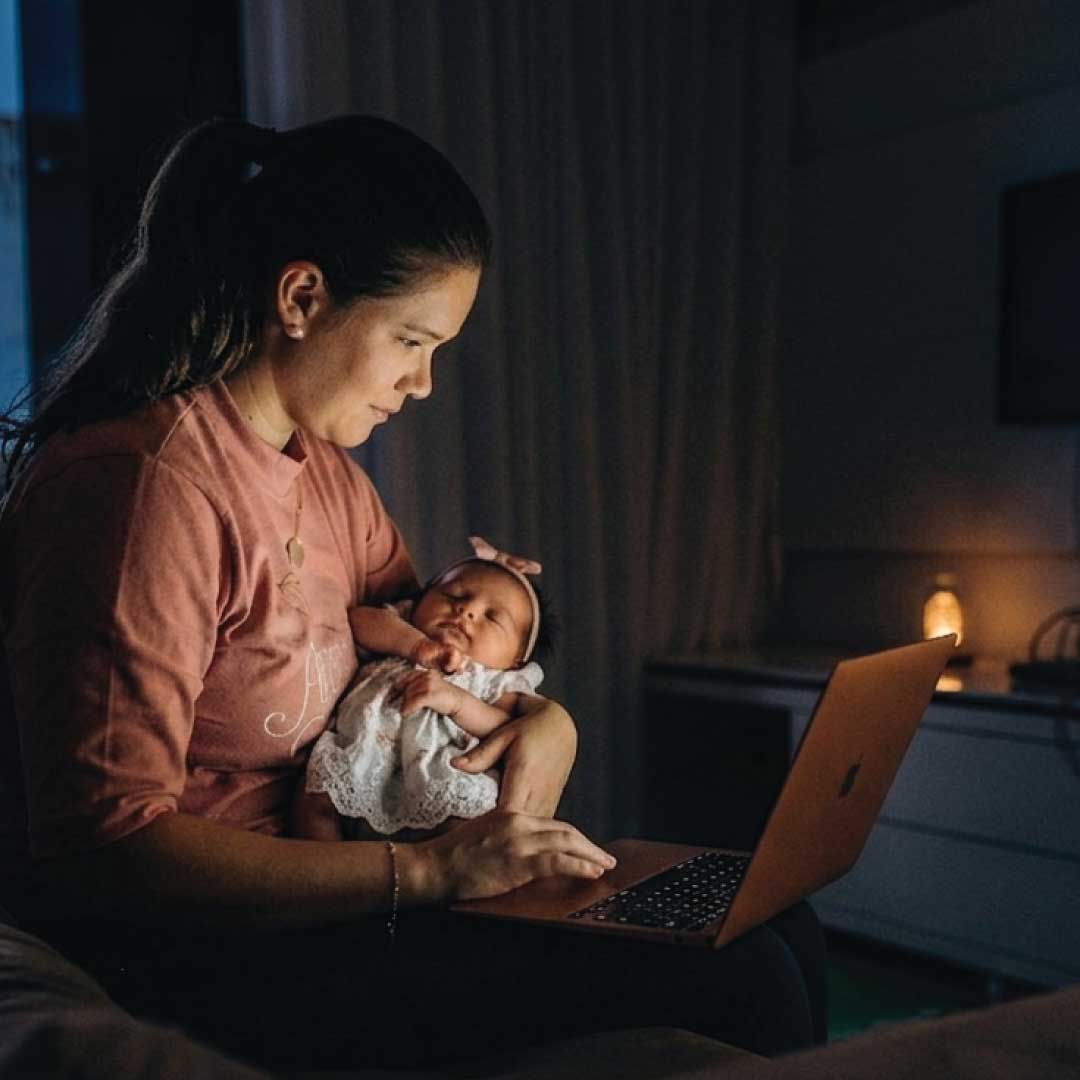
For the workers described in the AP's recent piece on microshifting, fragmenting the workday around personal obligations is a productivity strategy. For Marcus, it is a medical decision about when he sleeps.
78% of working parents say caregiving demands have negatively affected their physical health. 89% report feeling burned out. Care.com 2026 Cost of Care Report
When therapy slots are not flexible, are not close, or are not available at all, the burden of access does not disappear. It gets absorbed. By parents. In the form of sleep, health, and years of running on empty before the first session of the day even begins.
Career Identities Lost
Some of what this thread revealed was not a pivot. It was a loss.
James spent years building a career as a chef in a busy restaurant. He was good at it. He loved it. When his son's care needs grew beyond what any schedule could accommodate, he stopped. He is a full-time caregiver now.
"It's a shame," he wrote. "But my son needs me."
Four words. And underneath them, a whole professional life set aside.

Michelle was a dementia care director for years. The kind of work that is truly mission driven. When her son's therapy schedule made that level of commitment impossible, she took a retail job within a mile of home and school. "I could never have that kind of work schedule now," she said. The bitterness may or may not be there, but these are the facts.
Simon left commercial finance management to drive a delivery vehicle for a charity supporting children and adults with autism. Chantell was a funeral director before she became a school bus driver so her son could ride her route. The pattern across this thread is the same: not a career change, but a career sacrifice made quietly, without announcement, in service of access to care.
We do not talk about this enough. The downstream cost of a therapy access gap is not just developmental for the child. It is professional and financial for the whole family.
But something else is happening in this data. And it is worth paying attention to.
The Parent Pipeline
Across this thread, something unexpected kept appearing. Autism parents were not just adapting to the therapy system. Some of them were joining it.
Multiple parents reported working as Registered Behavior Technicians (RBTs) and scheduling their caseloads entirely around their own child's school day. Others are currently studying for their Board Certified Behavior Analyst (BCBA) certification. One parent is building a nonprofit and pursuing a doctorate in clinical psychology while raising three children on the spectrum.
Tanya is in school for her BCBA right now.
I absolutely love it. I enjoy learning ways to help my son as well.
— Tanya
That is not a career pivot. That is a feedback loop. A parent who learned what her child needed, could not find enough people who understood it, and decided to become one of them.
Autism families are not just waiting for the therapy workforce to arrive. Some of them are building it.
This matters beyond the individual stories. The US care workforce is facing growing demand alongside shrinking supply. Policy uncertainty is adding pressure from multiple directions. In that context, the quiet pipeline of autism parents moving into behavioral health, special education, and therapy roles represents something worth recognizing. These practitioners bring something most training programs cannot teach: they know what families are going through because they are the families.
What It Costs
The economic research on this is consistent, even if it rarely makes the headlines. A landmark study published in Pediatrics by Cidav, Marcus, and Mandell at the University of Pennsylvania found that mothers of children with autism are significantly less likely to be employed, work fewer hours per week, and earn substantially less than mothers of children without a diagnosis. That research has been cited more than 400 times and continues to be replicated in more recent international studies. The pattern has not changed.
The causes are not mysterious. Therapy schedules are demanding. Waitlists are long. Providers are not always close. Insurance fights take time. And the search for the right fit, for a provider who truly understands your child, can become a part-time job of its own.
Every week spent on that search is a week a family is holding a fragile employment arrangement together. Every month on a waitlist is another month of Marcus doing night shift math, of Sarah driving a bus route she did not plan on, of James setting aside the career he built.
We built Therapprove because the search for the right provider should not be another thing families have to carry. It does not solve the night shift math. It does not fix employer inflexibility or close the gaps in the system that force these choices in the first place. But finding a provider who is the right fit, who has availability, who accepts your insurance, who serves your area, should not require weeks of calls and emails and false starts. That part we can make easier. And for families already managing everything else, easier matters.
Start looking for therapy
Connect with our network of verified therapy providers to find the right fit for your family.
FAQ
Frequently Asked Questions
Why do so many autism parents end up working in schools?
School employment aligns directly with a child's schedule. Same hours, same days off, same school year. For most of the parents we heard from, this was not a career goal. It was the most practical way to stay available for therapy appointments, IEP meetings, and the calls that come without warning. Several parents specifically work at the same school their child attends so they can keep an eye on things and leave quickly if needed.
How does having a child with autism affect family income?
Research consistently shows that families of children with autism earn significantly less than comparable families. This is driven primarily by reduced maternal employment, fewer hours worked, and career changes made to accommodate caregiving demands. The pattern has been documented across multiple studies and continues to be supported by more recent research. The economic impact extends well beyond direct therapy costs.
What can families do while waiting for a therapy provider?
Waiting is one of the hardest parts of this journey. There are steps you can take in the meantime to stay connected and prepared, including reading our guide to pediatric therapy waitlists.
How does Therapprove help families access therapy faster?
Therapprove is a pediatric therapy referral platform that connects families with providers based on their child's specific needs, location, insurance, and availability. The goal is to remove the search burden so families can spend that time and energy on what actually matters. Learn more about how Therapprove works.
References
- Cidav, Z., Marcus, S. C., & Mandell, D. S. (2012). Implications of childhood autism for parental employment and earnings. *Pediatrics, 129*(4), 617–623. https://doi.org/10.1542/peds.2011-2700
- AARP and National Alliance for Caregiving. (2025). *Caregiving in the US 2025*. Washington, DC: AARP. https://www.aarp.org/pri/topics/ltss/family-caregiving/caregiving-in-the-us-2025/
- Catalyst / HR Brew. (2026, February). 42% of women are leaving the workforce over lack of caregiver support. *HR Brew*. https://www.hr-brew.com/stories/2026/02/03/42-of-women-are-leaving-the-workforce-over-lack-of-caregiver-support
- Care.com. (2026). *2026 Cost of Care Report: The workforce shift employers can't ignore*. https://www.care.com/benefits/the-workforce-shift-employers-cant-ignore-caregiving-pressures-and-the-great-exit/
- Centers for Disease Control and Prevention. (2025, April). Prevalence and early identification of autism spectrum disorder — ADDM Network, United States, 2022. *Morbidity and Mortality Weekly Report*. https://www.cdc.gov/autism/data-research/index.html
- Bureau of Labor Statistics / AARP Public Policy Institute. (2026, March). *February 2026 Employment Data Digest*. https://www.aarp.org/pri/topics/work-finances-retirement/employers-workforce/employment-data-digest/
- Bussewitz, C. (2026). Microshifting: Flexible scheduling in short productive bursts. *Associated Press*. https://apnews.com/article/microshifting-work-time-flexible-schedule-balance-97a98519916b447cd60c73261ffc0b4e