Where it Started for Kate
In 2016, Kate Miller lost her mother. Less than a year later, her son Beau was diagnosed with level 3 autism. She was grieving and navigating a new reality at the same time, without the one person she most wanted beside her.
What she built in the years that followed is a testament to what can happen when a parent with a broken heart decides to turn her pain into purpose.
Today, Kate is the co-founder of Ausome Indy, a statewide sensory support organization serving 12 or more Indiana counties. She is the Director of Development at Damar Foundation, one of Indiana's most respected organizations serving people with developmental and behavioral disabilities. She is a mother, an advocate, and one of the most honest voices in the autism family space.
This is her story. And in many ways, it might be yours too.
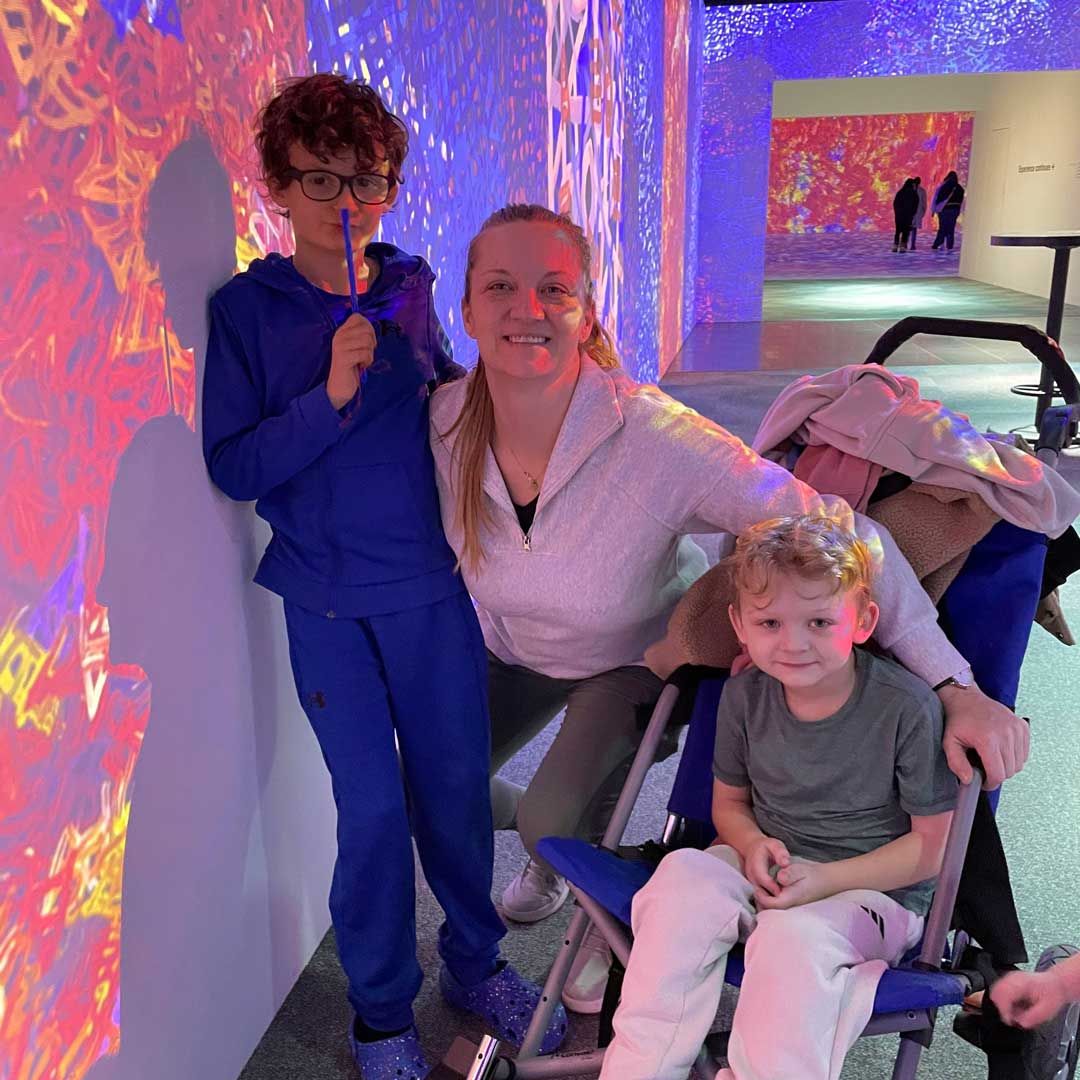
The Year Everything Changed
Kate's mother was more than a parent. She was a special education teacher in Indianapolis Public Schools for decades. She was one of the very first guardian ad litems sworn in for the state of Indiana in the late 1980s, dedicating her career to advocating for vulnerable children and helping fractured families stay together. Over the years, she and her husband welcomed 16 foster children into their home.
Advocacy wasn't something Kate's mother talked about. It was something she lived.
When she was diagnosed with progressive supranuclear palsy, a rare and progressive neurological disease, the family faced years of painful uncertainty and slow loss. Kate describes watching two neurological journeys unfold simultaneously: her mother's slow decline and the growing signs that something was different about her son Beau.
"I was holding the emotional weight of watching my mother decline while searching for answers for my child," Kate says. "It was an incredibly heavy season."
Her mother passed away in 2016. In 2017, Beau was diagnosed with autism.
Kate was grieving and stepping into an entirely new chapter of parenthood at the same time. But her mother's life had prepared her, in ways she couldn't yet see, for exactly this.
"Your child is still your child. Nothing about who they are changed in that moment. Only the language around it did." Kate Miller, Co-Founder, Ausome Indy
What an Autism Diagnosis Felt Like
Kate wasn't surprised by Beau's diagnosis. She had recognized early on that he was developing differently. But knowing something is coming doesn't make hearing it any easier.
"Once you hear the words, 'your child has autism,' your life is never the same," she says. "It's overwhelming and frightening."
She describes the resource literacy challenge alone as daunting: understanding what to do next, how to help Beau with his intense sensory dysregulation, and the financial cost of the tools that could help him. Sensory toys, chewies, spinning seats, crash pads, weighted vests, compression clothing. These items can make an enormous difference in how a child experiences their body and the world. But they aren't cheap.
And even with a college degree, a graduate degree, and a professional background in the nonprofit sector, Kate found herself overwhelmed.
"We thought, if this is how it feels for us, having grown up around disability and having the ability to research, how much harder must it be for families who don't have those same resources?"
That question became the foundation of everything that came next.
From Kitchen Table to 12 Counties
A few months after Beau's diagnosis, Kate and her sister Ellen sat down at their kitchen table. They wanted to do something tangible to honor their mother's legacy and fill the gap they kept seeing: children who needed sensory support but couldn't access it.
They started with what they knew. Sensory tools. Communication devices. Practical items that could help a child regulate, connect, and feel safe.
They called it Ausome Indy.

Their initial focus was on children in foster care, a population their mother had championed her entire career. Kate had learned through her research that children with autism are overrepresented in the foster care system. They are more likely to enter care than their neurotypical peers, tend to stay in the system longer, experience more placement disruptions, and often age out without permanency.
Why Foster Care?
Children with autism in foster care face compounded vulnerability. They are navigating neurological differences, including sensory dysregulation and communication barriers, while also processing the trauma of placement changes.
Every new home means a new nervous system recalibration. New sounds. New lighting. New rules. New caregivers. For a child whose body already struggles to regulate, that level of constant change can feel overwhelming and unsafe.
What often gets labeled as "behavioral challenges" is, in many cases, a dysregulated nervous system trying to survive.
Ausome Indy's sensory kits, sensory spaces, and community programs now serve families and children across Indiana. The organization includes a moms network of more than 1,700 women and has placed sensory rooms in spaces like the Marion County Department of Child Services office. All of it is volunteer-run and entirely donor-funded.
Their mother, Kate says, would simply say: "Yes." With an exclamation point.
What Makes the Difference
Through her work at Damar Foundation and her years of building Beau's care team, Kate has developed a nuanced perspective on what makes therapy exceptional versus merely adequate.
Her take might surprise you.
"The questions parents need to ask are often less about credentials alone and more about values, philosophy, and heart," she says. "Those are the qualities that shape how a child is truly seen and supported."
She encourages parents to ask therapists about their why. Why do they do this work? Why do they work with children with autism? She listens carefully to the language therapists use to describe the children they serve, whether they speak about strengths and dignity, whether they presume competence, whether they talk about long-term potential.
"Therapy is more than clinical inputs, outputs, and data sheets," she says. "It is deeply human-centered work."
She also reminds parents to share their own priorities out loud in the consultation. If play-based therapy matters to you, say that. If you want a therapist who emphasizes joy and engagement alongside skill-building, say that. A strong therapeutic partnership should welcome those values, not dismiss them.
For a full guide on what to ask a provider before committing, see our checklist for choosing the right ABA provider.
"Exceptional therapists don't just deliver services. They align with your family's values and navigate the therapy world with both skill and heart." Kate Miller
Finding Therapprove
As both a parent and a professional inside the autism ecosystem, Kate had seen the therapist search process from both sides. She knew how broken it was.
Most families describe the search as exhausting, confusing, and pressured. You make calls that don't get returned. You sit in waiting rooms. You try to process complex clinical information while you're already overwhelmed.
What Kate found in Therapprove was something different.
"Instead of feeling rushed, intimidated, or dependent on whoever happens to return my call first, I can thoughtfully explore options," she says. "I can review profiles, understand service lines, and essentially shop for the right fit for my child in a way that feels comfortable and empowering. And I can do that from my own home."
She describes being able to sit with the information privately, on her own timeline. To process without pressure. To compare providers based on their values and approach, not just availability.
"I can think. I can compare. I can reflect," she says.
For a parent who is already managing dysregulation, school meetings, appointments, and daily life, that shift matters enormously. Many families shut down during the search process simply because the cognitive and emotional load is too high.
"Before Therapprove, that level of access and autonomy simply didn't exist."
Ready to see what she means? Search for pediatric therapy providers near you and explore your options on your own terms.

What She Knows Now
If Kate could go back to the days right after Beau's diagnosis, she would do one thing differently: focus less on fear, and more on love.
She'd take more time to simply be with her son, to see him clearly, before the noise of the clinical world rushed in.
And she'd tell herself what she now tells every newly diagnosed parent:
"There will be joy. Not just survival. Not just coping. There will be real, deep, surprising joy on the other side of this moment."
For newly diagnosed families looking for a starting point, our guide to what to do in the first 30 days after an autism diagnosis walks through exactly what Kate recommends, step by step.
A Legacy That Keeps Expanding
Kate sometimes thinks about what her mother would say if she could see what Ausome Indy has become. The sensory rooms. The moms network. The businesses choosing inclusion. The children feeling regulated and safe and seen.
She believes her mother would simply say: keep going. This is needed. You're exactly where you're supposed to be.
"My mom dedicated her life to helping children stay safe, supported, and seen," Kate says. "Her life taught me that advocacy is not just something you do. It's something you live."
For Kate Miller, it still is.
For families in Indiana navigating autism resources, Therapprove is here to help. Start your provider search today.